Skip to content
Chang Research
Live

MODULE 01 · Start from zero

Money Basics: What to Fix Before You Invest Your First Rupee

Start from zero. Budgeting, emergency funds, inflation and compounding, explained before you invest a single rupee.

Beginner6 min readIndia-focused examples

Published by Chang Research Base · Last reviewed · Educational content, not investment advice (disclaimer)

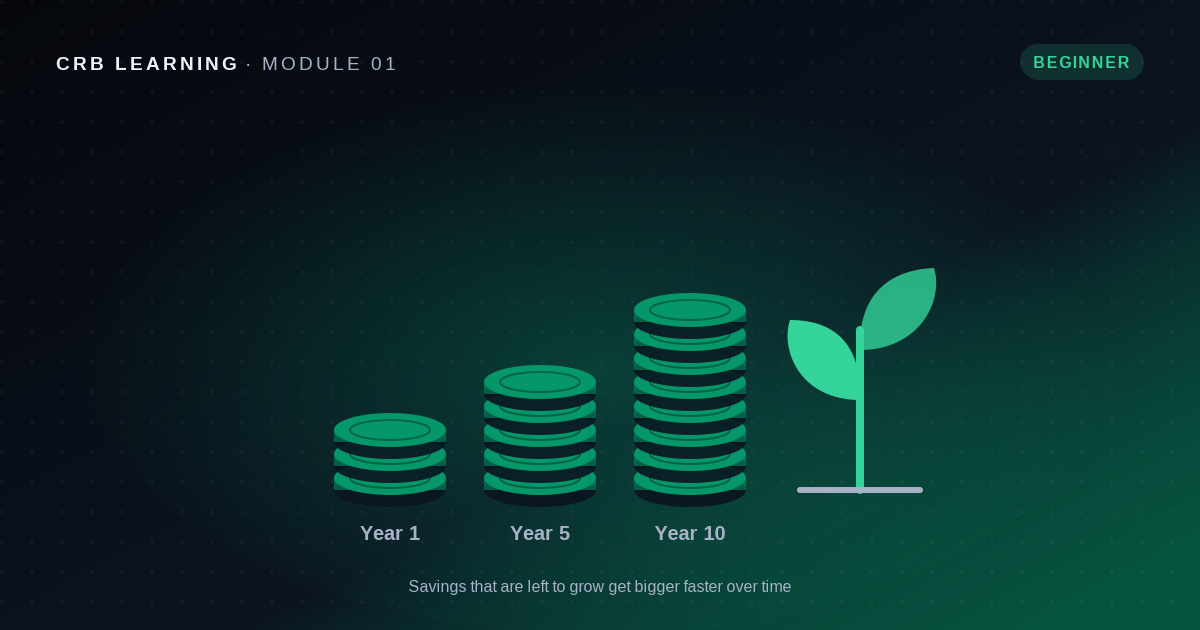
Illustration of three coin stacks growing taller next to a small plant, showing savings growing over time

Why this matters

Most people want to jump straight to stocks. That is like trying to run before you can stand.

If your basic money habits are weak, even a great investment will not save you. One medical bill or one lost job can force you to sell at the worst time.

This lesson covers the four things to get right first: where your money goes, a safety cushion, inflation and the magic of compounding.

Step 1: Know where your money goes

A budget is just a plan for your money. You decide where it goes before it disappears.

A simple starting point is the 50-30-20 rule:

  • 50% for needs: rent, food, travel, bills.
  • 30% for wants: eating out, shopping, subscriptions.
  • 20% for savings and investing.

It is a guide, not a law. If you live with your parents, you may be able to save much more. If rent is high, you may save less. The habit matters more than the exact numbers.

Pay yourself first. Move your savings on salary day, then spend what is left. Most people do the opposite and save nothing.

Step 2: Build an emergency fund

An emergency fund is money kept aside only for real emergencies: job loss, a hospital bill, an urgent repair.

A common target is 3 to 6 months of your basic expenses. If you spend ₹20,000 a month, aim for ₹60,000 to ₹1,20,000.

Keep it somewhere safe and easy to reach, like a savings account, a fixed deposit or a liquid mutual fund. Do not keep it in stocks. Stocks can be down 30% on the exact day you need the cash.

Good to know: bank deposits in India are insured by DICGC up to ₹5 lakh per person, per bank. That limit covers your savings, fixed deposits and interest added together.

Step 3: Understand inflation, the silent thief

Inflation means prices go up over time. The same ₹100 buys less every year.

Think about a plate of dosa or a movie ticket ten years ago and today. That gap is inflation.

The Reserve Bank of India (RBI) aims to keep inflation around 4%, within a range of 2% to 6%. Even at 6% a year, something that costs ₹100 today would cost about ₹179 in ten years.

This is why cash under the mattress loses value. If your money earns less than inflation, you are getting poorer slowly, even though the number in your account looks the same.

Step 4: Let compounding do the heavy lifting

Compounding means you earn returns on your returns. It starts slow and then snowballs.

A quick trick is the Rule of 72. Divide 72 by your yearly return to see roughly how many years it takes to double your money. At 8% a year, money doubles in about 9 years. At 12%, about 6 years.

The biggest ingredient is not money. It is time. Someone who starts at 22 with small amounts can end up ahead of someone who starts at 32 with bigger amounts.

Step 5: Kill expensive debt first

Not all debt is equal.

  • Costly debt: credit card dues and instant personal loans. Card interest is often 3% or more per month. No normal investment beats that.
  • Useful debt: an education loan or a sensible home loan can help you build something of value at a much lower rate.

If you carry credit card debt, paying it off is the best "investment" you can make right now. It is a guaranteed saving.

Real-world example

Example: Priya's first salary

Priya is 23 and takes home ₹30,000 a month. This is an example plan, not advice for everyone.

  • ₹15,000 goes to needs: PG rent, food, travel.
  • ₹9,000 goes to wants.
  • ₹6,000 is moved out on salary day.

For the first year, the ₹6,000 goes into her emergency fund until she has about ₹60,000. After that, she starts a ₹5,000 monthly SIP.

What could that grow to? If she invests ₹5,000 every month for 20 years and assumes a 10% yearly return, she would put in ₹12 lakh and end with roughly ₹38 lakh. Real returns will be different. They are not guaranteed and markets do not move in a straight line. The point is the shape: most of the final amount comes from growth, not from her deposits.

Key terms and what they mean

Budget
A plan that tells your money where to go each month.
Emergency fund
Cash kept only for surprises, usually 3 to 6 months of expenses.
Inflation
The rise in prices over time, which reduces what your money can buy.
Compounding
Earning returns on both your original money and your past returns.
Liquidity
How quickly you can turn something into cash without losing value.
Asset
Something you own that has value or earns money, like shares or a deposit.
Liability
Something you owe, like a loan or credit card dues.

Benefits, risks and limits

What is good about it

  • You can handle surprises without borrowing or selling investments.
  • You invest with money you truly do not need soon, so market falls do not scare you.
  • Starting early with small amounts gives compounding more time to work.

Risks and limits

  • Being too safe has a cost. Money left only in a savings account may not keep up with inflation.
  • A budget only works if you track it honestly.
  • Return examples use assumed rates. Real results can be lower, and can be negative in some years.

Common mistakes beginners make

  1. Investing before building any emergency fund.
  2. Putting money in stocks while paying 36% or more a year on credit card debt.
  3. Waiting for a "big amount" to start. Small and early beats big and late.
  4. Treating a salary hike as a spending hike and never raising savings.
  5. Chasing "double your money" schemes. If it sounds too good to be true, it is.

Key takeaways

  • Fix your base first: budget, emergency fund, no costly debt.
  • Inflation quietly shrinks idle cash, so long-term money needs to grow.
  • Time matters more than amount. Start small, start now.
  • No real investment offers high returns with zero risk.

Frequently asked questions

How much should I save from my salary?

Aim for about 20% if you can. If that is too hard right now, start with 5% or 10% and raise it every time your income goes up. The habit is more important than the starting number.

Where should I keep my emergency fund?

Somewhere safe and quick to access, such as a savings account, a fixed deposit you can break, or a liquid mutual fund. It should not be in stocks, because their value can fall just when you need the money.

Is it okay to start investing with ₹500?

Yes. Many mutual funds allow SIPs of ₹500 or even less. Starting small helps you build the habit and learn how markets feel before bigger money is involved.

Should I repay loans or invest first?

Clear high-interest debt like credit cards first, since the interest you save is higher than what most investments can earn. For low-interest loans such as a home loan, many people do both together.

Sources and further checking

Examples use made-up or rounded numbers unless a date and source are given. Rules, rates and contract details change, so confirm them with the official source before acting. This lesson is for education only and is not investment, tax or legal advice. See the disclaimer.